從左撇子「去妖魔化」談起,踏出與社會、父母及自己和解的第一步:專訪《電流下我記得》導演Cameron Kostopoulos
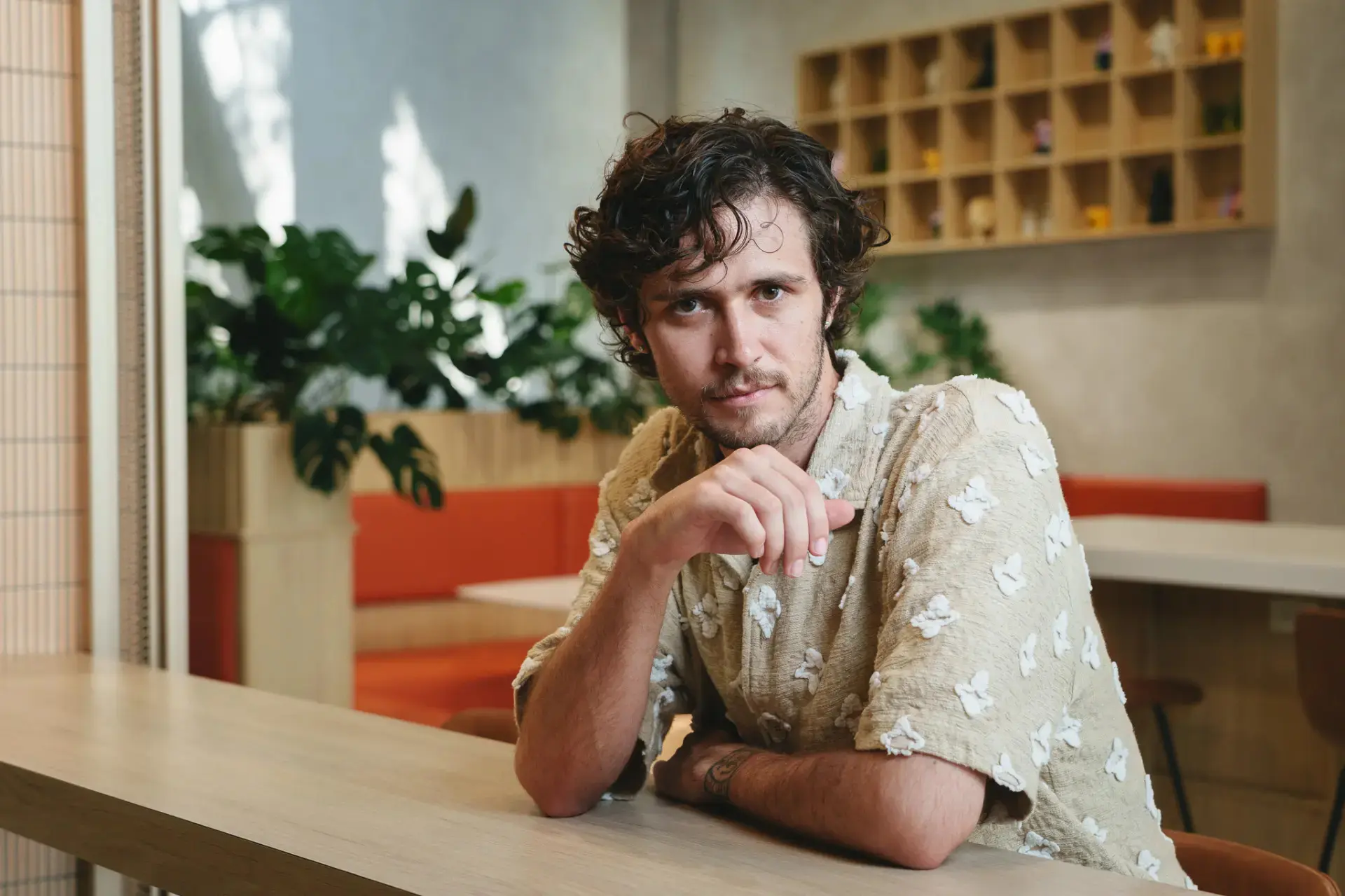
At just 26 years old, Cameron Kostopoulos is already a remarkably talented VR creator, and his work In the Current of Being, I Remember is the perfect testament to his talent. Hailing from the relatively conservative state of Texas in the U.S., this director brings a heartfelt sensitivity and an effortless mastery of VR. Coupled with real-world installation scenes, he has crafted an emotionally powerful interactive VR experience. It's a story about what’s considered “normal” and “abnormal,” blending sight, sound, and touch in ways that are both heartbreaking and haunting. Yet, somehow, it also blooms with hope and healing, like a miracle in itself.
At the end of the interview, Cameron openly shared that his hope in creating In the Current of Being, I Remember was to help parents who struggle to accept their children's true selves. Through this VR experience, he hopes to rebuild communication and promote understanding. What really moved me was his honesty: “I come from Texas, where LGBTQ+ acceptance is limited. I even have family members with homophobic views, and I’ve lost contact with my parents...”
Despite the pain, Cameron is incredibly generous. He plans to adapt his work into different versions and release it for free on platforms like Steam, Meta Horizon, and YouTube, aiming to reach as many people as possible and drive social change. I secretly hope one day it might even touch his distant family, helping heal old wounds.
“Did you get the idea for In the Current of Being, I Remember from Stanley Kubrick’s A Clockwork Orange?” When asked this, the director’s eyes lit up with excitement, revealing his film fan side, “Exactly! That movie was a huge inspiration, especially the environment—I wanted to equate gender transformation therapy with ‘torture,’ because that’s really what it is.”
To experience this piece, one must begin with a specific donning procedure: a white gown, a notebook, a strapped chair, arm restraints... These elements are all meticulously designed by the creator to recreate a near-realistic experience of 'conversion therapy' for sexual orientation. Unlike typical VR films, which usually only require a headset (and perhaps hand controllers), In the Current of Being immerses the viewer further by having them wear a haptic vest, arm sleeves, and gloves. The full-body haptic feedback goes beyond merely mimicking electric shocks; it also conveys a pounding heartbeat in the chest and a numbing discomfort in the fingers. An 'imagined' stinging pain courses through the body, creating an intensely personal experience that, combined with one's own imagination, simulates the agony of an 'abnormal' person forced onto the 'treatment' table.
Why did you choose “correcting left-handedness” as the opening of the story? From the plot outline, it’s clear that the core of the work is based on the real experiences of Carolyn Mercer, a survivor of “conversion therapy.” The director explains, “Carolyn’s story is so special. She was born left-handed,” she says. “Back then, being left-handed was considered a ‘disorder,’ so people forced you to switch to your right hand. But now, most people understand that it’s totally normal.” She adds, “But a long time ago, left-handedness was also seen as something to ‘convert’.”
This is similar to how we view homosexuality and transgender identities: “When we stop trying to ‘correct’ these things, the number of left-handed people increases. It’s not that suddenly more people are born left-handed, it’s that more people are finally brave enough to say ‘this is who I am.’” The same goes for LGBTQ+ folks today: “It’s not that the number of people identifying as LGBTQ+ has suddenly increased, but that more are able to be themselves and stand out. I think the world also needs to learn to accept people whose gender or sexuality differ from their beliefs.”
I asked, “Can you share your relationship with Carolyn?” The director’s eyes light up: “After my first film premiered, I started talking to many survivors of ‘conversion therapy.’ Meeting Carolyn and hearing her story really shaped this project.” The conversations during that time formed the backbone of “I Remember in the Current.” “We even tried re-recording her lines later, but it just didn’t work… The emotions from that first conversation were so real, nothing later could match it.”
Eventually, Cameron met her in person in the UK, where she lives with her wife. “She’s very supportive of this project, but she didn’t speak about this part of her life for most of her life. Only in recent years has she started to appear in media interviews.” For her, making this film is a kind of advocacy: to hope that this kind of “conversion therapy” will never happen again.
What was Carolyn’s reaction after experiencing the finished work? The director smiles, “Thanks for asking. I brought a full set of VR gear to the UK to show her. She said she wanted to try, but I advised, ‘First, find a friend to experience it first.’” Turns out, that friend watched it and said, “This is so important! Everyone in the world needs to see this. But Carolyn shouldn’t watch it.” The director also worries it might be too intense for her, too emotional, and could re-traumatize her. She’s been through flat films and listened to recordings, so there’s no need for her to put on tactile gear and relive everything again. Still, Carolyn did experience the piece, just without the “touch” sensations—everyone just wants to protect her from reliving those nightmares.
So, how strong do you think the experience should be for the average viewer? She laughs, “I personally want it to be as intense as possible!” but quickly adds, “It really depends on the person—some are pregnant, some are sensitive to vibrations, and some have epilepsy. There’s no one-size-fits-all setting.”
The link between “conversion therapy” and religious doctrine runs deep, Cameron says: “The whole history is very complicated. For example, churches’ ‘conversion’ efforts are hard to ban legally because it involves religious freedom. Some religions believe that people shouldn’t change genders or sexual orientation, and that they must ‘fix’ those they see as abnormal.” Even today, some governments still permit conversion therapy—often out of prejudice, hatred, or lingering beliefs that LGBTQ+ identities are mental illnesses. Many people haven’t caught up with the times. I asked her, “So, do you dislike religious people?” She shakes her head, “Not at all! My grandparents were devout believers, and I love them. But the danger is when ‘tolerance’ turns into ‘intolerance’—when people use religion to justify hatred, exclusion, and shaming. That’s not religion; that’s obsession.”
“This film aims to comfort those who have gone through similar experiences, but also to shake those who don’t believe these things happen. If it doesn’t shock you, you won’t talk about it. If you don’t talk, you won’t face the fact that these wounds can last a lifetime.”
In the final night scene of In the Current of Being, with flocks of birds… why did the director choose to portray the protagonist’s “recovery” this way? She explains, “For me, it’s not about a ‘happy’ improvement, but rather a more realistic sense of calm. Her happiness has been permanently limited, and her ability to experience the richness of life has been destroyed. But Carolyn isn’t depressed; she’s content, peaceful, and living a life with her wife. This kind of ‘peace in the darkness’ is very beautiful." The night sky and the flocks of birds symbolize freedom and liberation, with the number of birds representing humanity— that we all can fly together. However, she reminds us that being free doesn’t mean everything is perfect. The night is long, and there’s still a long road ahead. With a long night and a long road still ahead, it's likely that young Director Cameron Kostopoulos, brimming with creative power, will continue to illuminate the way with his works.